Parents’ Guide to Writing a Marriage Biodata for Their Children
Parents often feel responsible for introducing their children to prospective families, especially in arranged setups. Crafting a biodata that captures your child’s personality without sounding boastful or outdated can feel daunting. This guide walks you through research, writing, etiquette, and formatting so you can present information accurately and lovingly.
Step 1: Collect Information Like a Friendly Interview
- Schedule a relaxed chat: Treat it like a storytelling session, not an interrogation.
- Topics to cover: education milestones, career journey, hobbies, beliefs, travel memories, and future goals.
- Ask for anecdotes: “What’s your proudest project?” or “Which festival memory should we highlight?”
- Document preferences: dietary choices, languages spoken, relocation flexibility, and thoughts on joint families.
- Verify facts: double-check spellings of universities, job titles, certifications, and awards.
Step 2: Structure the Biodata
-
Personal Snapshot
- Full name, birth details, height, location, community.
- Add pronunciation notes for names if relatives abroad will read the profile.
-
Family Overview
- Parents, siblings, grandparents, and values your household upholds (traditional, progressive, spiritual).
- Keep it concise—focus on the immediate family unless extended relatives play a vital role.
-
Education & Career
- Highest degree first, followed by notable certifications.
- Present career growth in plain language: “Currently managing digital campaigns for a healthcare brand.”
-
Personality & Interests
- Share hobbies, causes, and weekend routines to humanize the biodata.
- Mention a mix of traditional activities (festivals, community work) and modern interests (travel, fitness).
-
Partner Expectations
- Summarize what your child seeks: mutual respect, shared ambitions, spiritual alignment.
- Avoid rigid checklists; focus on values and lifestyle compatibility.
-
Additional Sections
- Horoscope, passport status, or property details—include only if relevant and approved by your child.
Need a ready structure? Use the MatrimonyBio editor and pick a template that already has these blocks. You can edit text and preview PDF exports instantly.
Step 3: Nail the Tone & Language
- Speak as narrators, not negotiators: “We are proud of...” instead of “We demand...”
- Highlight character traits: kindness, reliability, curiosity.
- Stay honest: authenticity builds trust faster than exaggerated claims.
- Respect boundaries: avoid sharing private health details or sensitive family conflicts.
Sample Intro Paragraph
“Namaste! We are the Guptas from Jaipur, writing about our daughter Aditi, a 28-year-old chartered accountant who balances financial diligence with a love for Bharatanatyam and weekend treks. We raised her in a home where Vedic chants open the day and TED Talks close it, and we hope to meet a family that values both tradition and curiosity.”
Step 4: Review Etiquette & Privacy
- Proofread aloud to catch awkward phrasing.
- Get your child’s approval before sharing externally.
- Limit distribution: send PDFs individually rather than blasting large family groups.
- Protect personal data: omit PAN numbers, exact salary slips, or bank details.
- Use watermarks if you suspect the PDF might circulate publicly.
Step 5: Choose the Right Template
- Classic Template: ideal if grandparents or community elders prefer a familiar look.
- Modern Template: clean lines and legible fonts for digital-first sharing.
- Luxury Template: ornate borders for festive introductions or elite matrimonial events.
Every template inside MatrimonyBio can be duplicated, recolored, and exported. Keep both classic and modern versions ready so you can share the format your audience prefers.
Working with blended families? Share this article along with the single parents biodata guide so relatives understand sensitivities. When you move to the “About Me” section, borrow tone cues from our compelling about-me tutorial to keep the narrative lively.
Need official documentation links? Pair this guide with references from the Ministry of External Affairs marriage registration page or your state registrar so families understand legal next steps after biodata exchange.
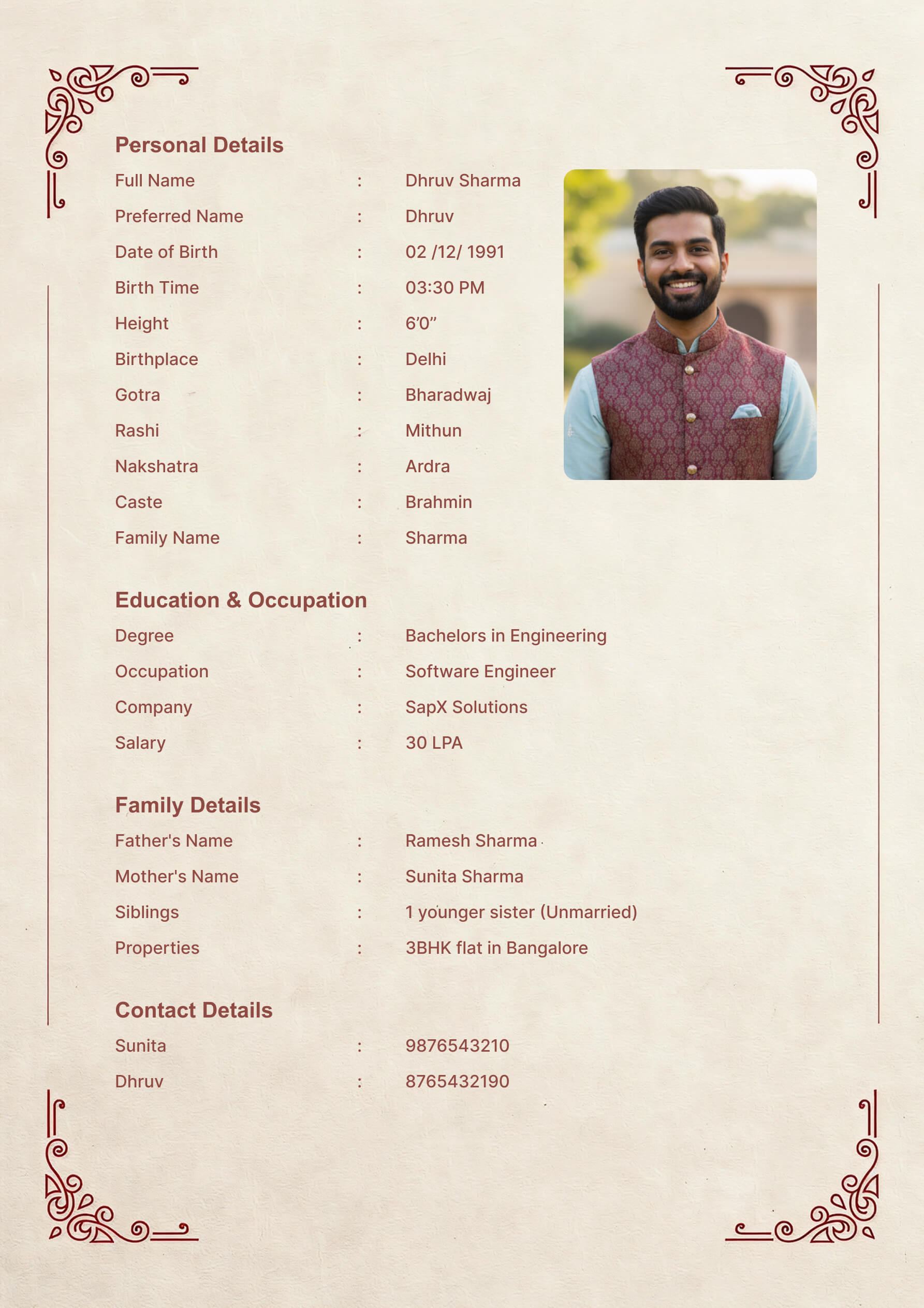 Classic template preview—parents can pair timeless borders with updated copy for relatives who expect a familiar layout.
Common Mistakes Parents Should Avoid
-
Overpromising
- Statements like “Will relocate anywhere immediately” create pressure. Be realistic.
-
Writing only in third person
- Include a paragraph in your child’s voice. It feels more authentic.
-
Leaving out personal aspirations
- Mention future study plans, entrepreneurship dreams, or community goals.
-
Using outdated photos
- Select recent, high-quality images—one traditional attire, one professional, one casual.
-
Ignoring spelling and formatting
- Consistent fonts, bullet points, and headings show effort.
Quick Checklist Before Sharing
- [ ] All names, dates, and degrees verified
- [ ] Tone feels warm and respectful
- [ ] Sensitive details approved by your child
- [ ] Photos compressed for email/WhatsApp
- [ ] PDF exported from MatrimonyBio editor with correct template
- [ ] Backup copy saved securely
Final Call-to-Action
Parents know their children best, but the way you present that love can either invite meaningful conversations or overwhelm prospects. Use this guide, collaborate closely with your child, and rely on ready-made structures in the MatrimonyBio editor to keep the process stress-free. A thoughtfully written biodata reflects family values, care, and preparedness—qualities every prospective family appreciates.