Modern Marriage Biodata Format: Tradition and Style
Parents may love intricate borders while you prefer a clean, mobile-friendly PDF. The good news? You can have both. A modern marriage biodata format respects cultural anchors such as family lineage and horoscope details while adding typography, color palettes, and storytelling techniques that resonate with Gen Z and millennial prospects. Use this guide to upgrade your biodata without alarming the elders reviewing it.
Why Update the Format at All?
- First impressions happen on phones: Most biodata files are forwarded on WhatsApp or email. A modern layout preserves readability on small screens.
- Differentiation: Traditional templates blur together. Minimal sections, icons, and subtle color coding help your profile stand out.
- Clarity over clutter: Clean spacing and bite-sized paragraphs make it easier for busy families to skim and remember key facts.
- Global families: When relatives live abroad, a modern format communicates openness and professionalism while still sharing traditions.
Essential Sections to Keep (Tradition Intact)
-
Personal Snapshot
- Full name, age, height, birthplace, and community lineage.
- Include pronunciation hints or preferred nicknames for diverse audiences.
-
Family Background
- Parents’ names, professions, siblings, and ancestral hometown.
- Keep hierarchy intact: elders first, then siblings.
-
Education & Career
- Highest qualification forward, specialization, professional achievements.
- Add one line about future aspirations, e.g., “Exploring leadership roles in product design.”
-
Lifestyle & Interests
- Food habits, travel style, faith practices, hobbies.
- Mention both traditional rituals and contemporary hobbies to show balance.
-
Partner Expectations
- Core values, family preferences, career support, and location flexibility.
- Avoid rigid checklists. Emphasize shared experiences instead.
-
Astrological / Cultural Details (Optional)
- Horoscope, nakshatra, and gothra can be included in a collapsible or sidebar section. If you cite traditional references, lean on trusted resources like Drik Panchang or official temple publications so details stay accurate.
Modern Design Touches That Still Feel Familiar
- Typography pairing: Combine a serif font for headings (traditional elegance) with a sans-serif font for body text (modern clarity).
- Color palette: Use muted jewel tones—deep maroon, emerald, or indigo—paired with ample white space.
- Iconography: Simple icons for education, career, and travel help older readers navigate while staying unobtrusive.
- Section cards: Encapsulate each section in a card with subtle drop shadows for a contemporary feel.
- Microcopy: Replace labels like “CASTE” with inclusive alternatives such as “Community & Traditions.”
Preview these ideas instantly inside the MatrimonyBio editor; switch between modern and classic templates to show family members both options before finalizing.
Storytelling That Blends Old and New
-
Cultural lineage + personal values
“Raised in a Tamil Iyer family that celebrates Margazhi kolams, I’m equally excited about design sprints that solve banking access challenges.”
-
Rituals + routines
Mention Friday temple visits alongside weekend treks, or volunteering with grandparents at community kitchens.
-
Future vision
Share how you imagine festivals, travel plans, and shared learning with a future partner to demonstrate rooted but progressive thinking.
-
Tone
Keep sentences warm and conversational while respecting formality for elders.
Template & Layout Recommendations
- Modern Template: Minimal grid with elegant typography, ideal for tech or creative professionals.
- Luxury Template: Gold accents for families expecting grandeur; pair with monochrome portraits.
- Natural Template: Soft color blocks for couples highlighting mindfulness or eco-friendly values.
- Classic Template (with tweaks): Start with the classic layout, then remove heavy borders, add icons, and increase line spacing.
Inside the MatrimonyBio editor you can duplicate any template, apply custom colors, and export multiple PDFs—one modern, one traditional—to keep both generations happy.
Working across cities? Pair this layout advice with the travel planning tips inside our long-distance biodata playbook, then cross-reference with the working women guide if you need help balancing career and tradition within the same narrative.
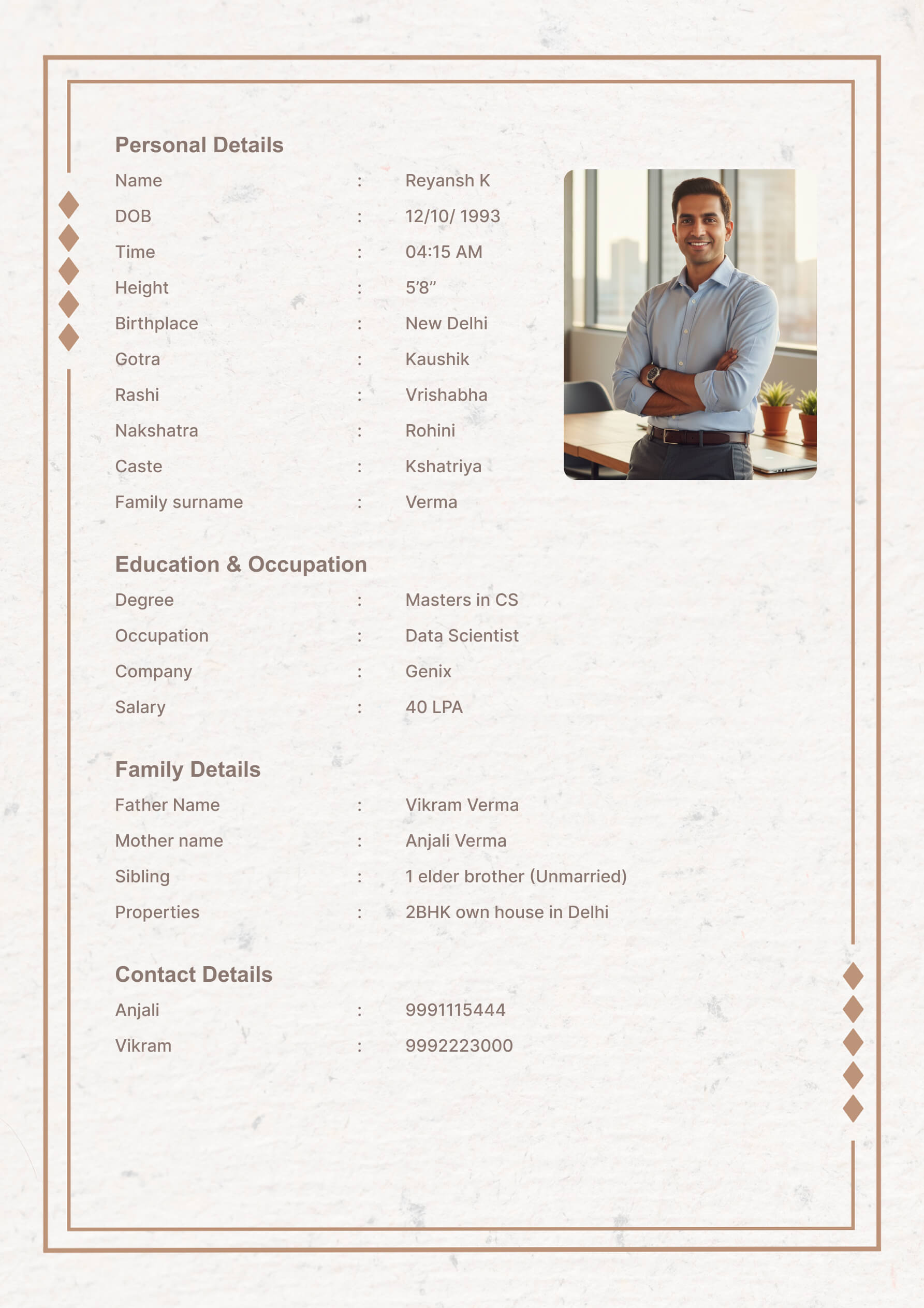 Modern template preview that demonstrates how dual-tone panels keep information readable on mobile while still looking premium.
Mistakes to Avoid When “Modernizing”
-
Overusing gradients and neon colors
These reduce readability and may feel unserious to elders.
-
Removing essential cultural anchors
Keep horoscope or traditional sections accessible even if they’re optional.
-
Writing like a dating profile
Maintain respectful language. Modern style doesn’t mean casual slang.
-
Skipping elders’ review
Share drafts with parents or mentors to ensure tone and details feel authentic.
-
Ignoring accessibility
Use 14–16 px body text, adequate contrast, and descriptive headings so everyone can read comfortably.
Sample Paragraph Bridging Both Worlds
“Namaste! I’m Rhea, a 30-year-old product strategist raised in a close-knit Marwari family in Jaipur. My weekdays toggle between user interviews and evening aarti with parents, while Sundays are for sketching sari-inspired patterns and trying artisanal coffees. I look forward to building a grounded, creative home with someone who cherishes tradition yet enjoys spontaneous city escapes.”
Final Call-to-Action
A modern marriage biodata format is really about intent: honoring your roots while presenting your life with clarity. Draft your content first, then experiment with colors, icons, and typography inside the MatrimonyBio editor. Export multiple versions—share the contemporary one digitally and keep a classic print-ready copy for elders. This dual approach shows respect, foresight, and design flair in one go.