Biodata vs Resume: Key Differences and When to Use Each
In today's digital age, we often hear the terms "biodata" and "resume" used interchangeably, but they serve different purposes. For matrimony users, understanding this distinction is important so your marriage profile is shared in the right format with families.
What is a Biodata?
A biodata (short for "biographical data") is a comprehensive personal document that provides detailed information about an individual's personal, family, educational, and professional background. In the Indian context, biodata is primarily used for matrimonial purposes.
Key Characteristics of Biodata:
- Personal Focus: Emphasizes family background, values, and personal details
- Comprehensive Information: Includes family details, religious beliefs, cultural background
- Matrimonial Purpose: Designed for marriage proposals and family introductions
- Traditional Format: Often follows cultural and regional traditions
- Family-Centric: Includes information about parents, siblings, and extended family
What is a Resume?
A resume is a professional document that summarizes an individual's work experience, skills, education, and achievements. It's specifically designed for job applications and career advancement.
Key Characteristics of Resume:
- Professional Focus: Emphasizes work experience, skills, and achievements
- Concise Information: Brief, targeted information relevant to job requirements
- Career Purpose: Designed for job applications and professional networking
- Modern Format: Follows contemporary business standards
- Achievement-Oriented: Highlights professional accomplishments and skills
Key Differences Between Biodata and Resume
| Aspect | Biodata | Resume |
|--------|---------|---------|
| Purpose | Marriage proposals, family introductions | Job applications, career advancement |
| Length | 2-4 pages (comprehensive) | 1-2 pages (concise) |
| Focus | Personal and family information | Professional experience and skills |
| Tone | Formal and respectful | Professional and confident |
| Photos | Usually included | Generally not included |
| Family Details | Extensive family information | Minimal family information |
| Religious/Cultural | Often included | Usually excluded |
| Personal Interests | Detailed hobbies and interests | Brief mention if relevant |
| Format | Traditional, structured | Modern, customizable |
When to Use a Biodata
1. Marriage Proposals
- Arranged marriage introductions
- Family-to-family meetings
- Matrimonial website profiles
- Marriage bureau submissions
2. Family Introductions
- Meeting potential in-laws
- Cultural and community events
- Traditional ceremonies
- Family gatherings
3. Cultural Contexts
- Indian matrimonial traditions
- Religious community events
- Regional marriage customs
- Family alliance discussions
Sample Biodata Templates
To help you understand what a modern marriage biodata looks like, here are professional template examples:
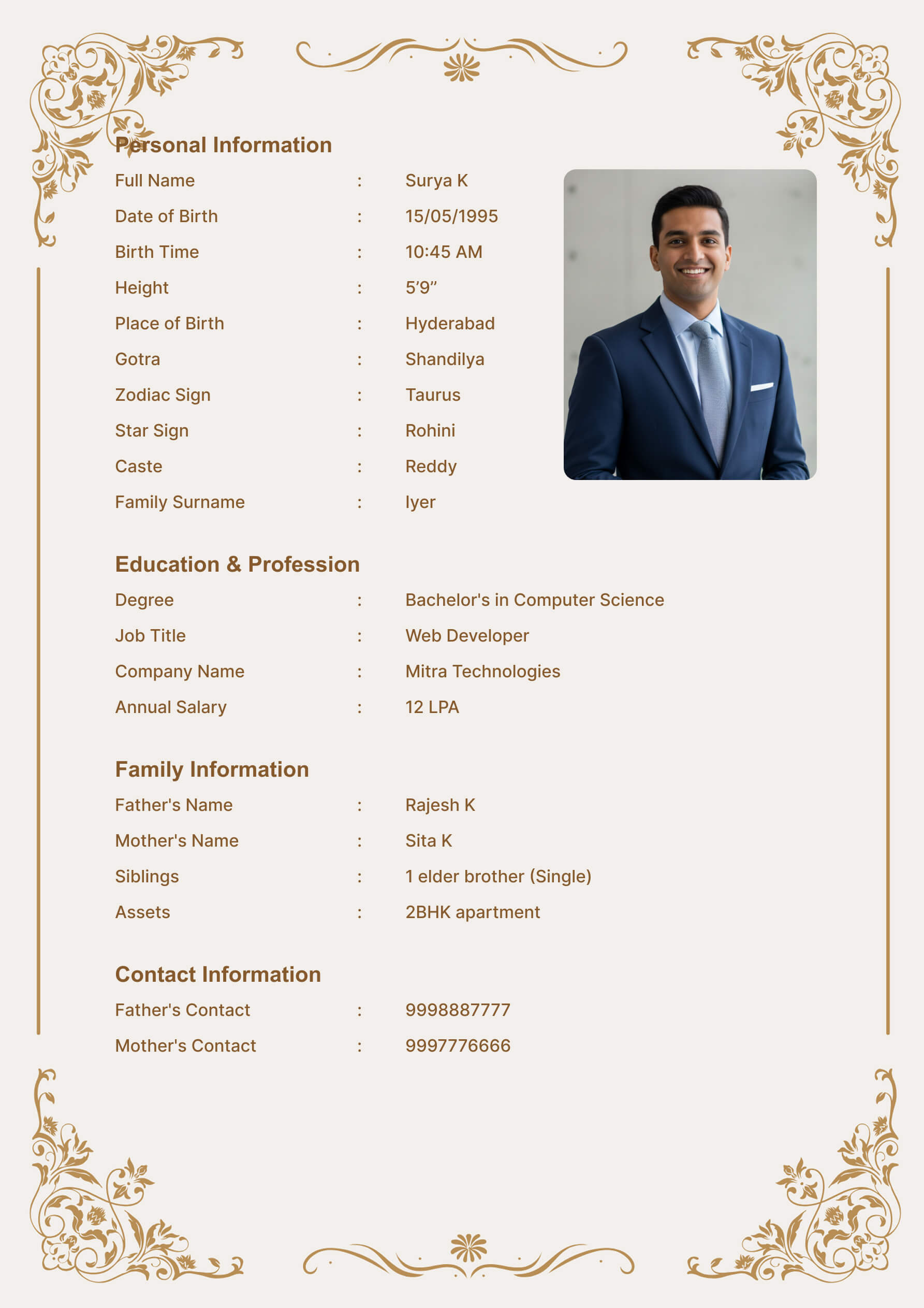 Professional biodata design focused on personal and family information
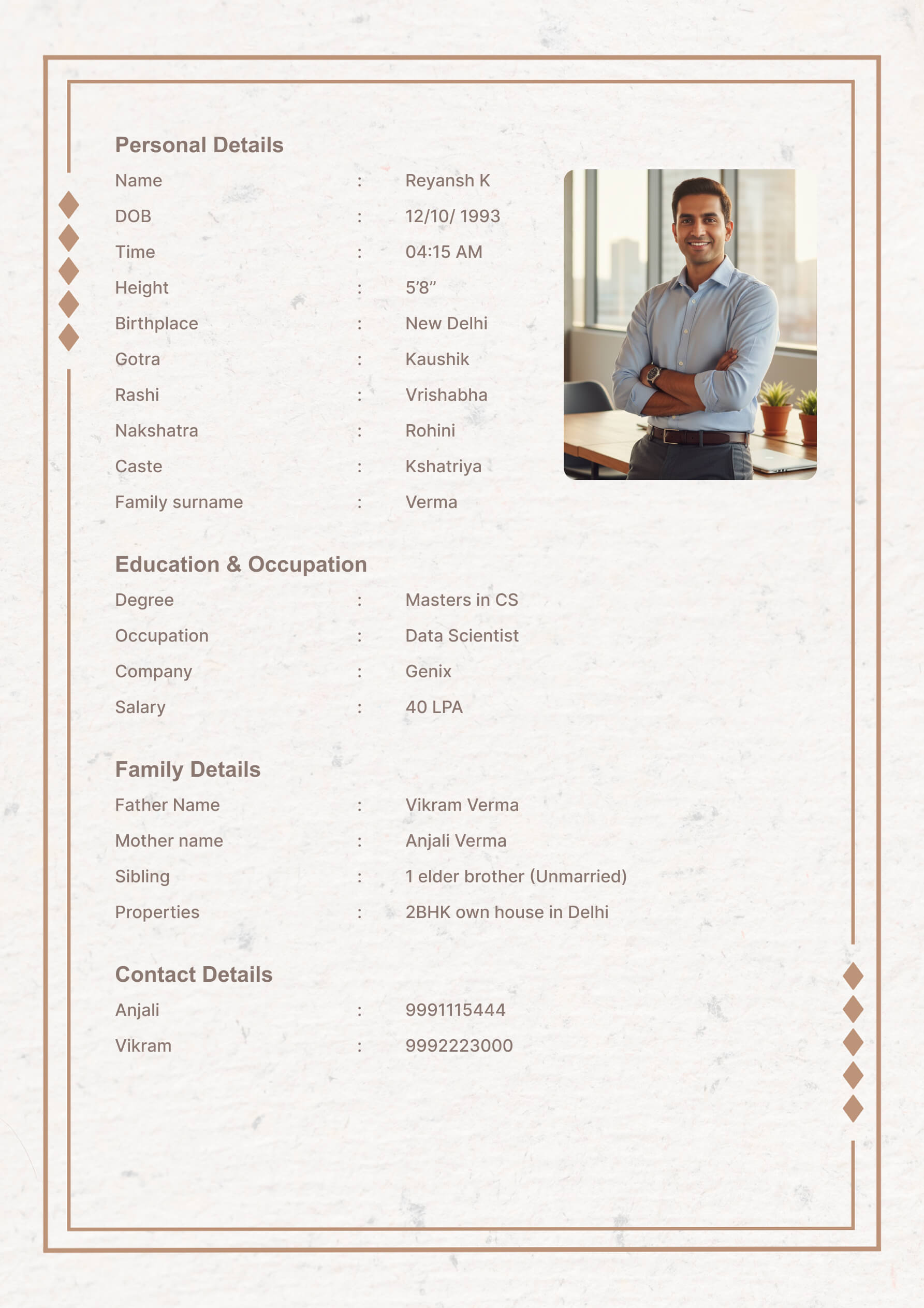 Contemporary biodata format with clean, organized sections
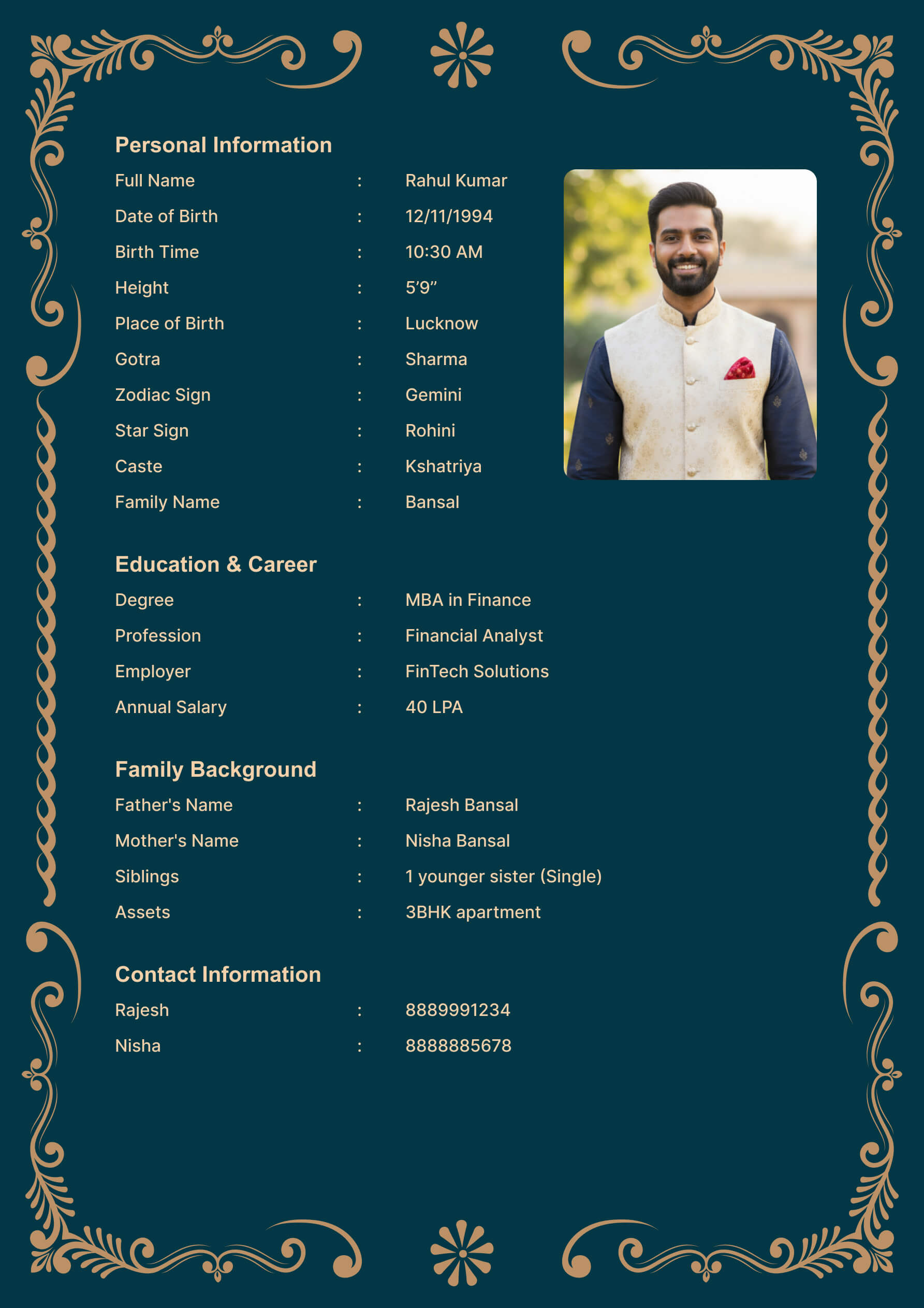 Traditional yet modern biodata with cultural elements
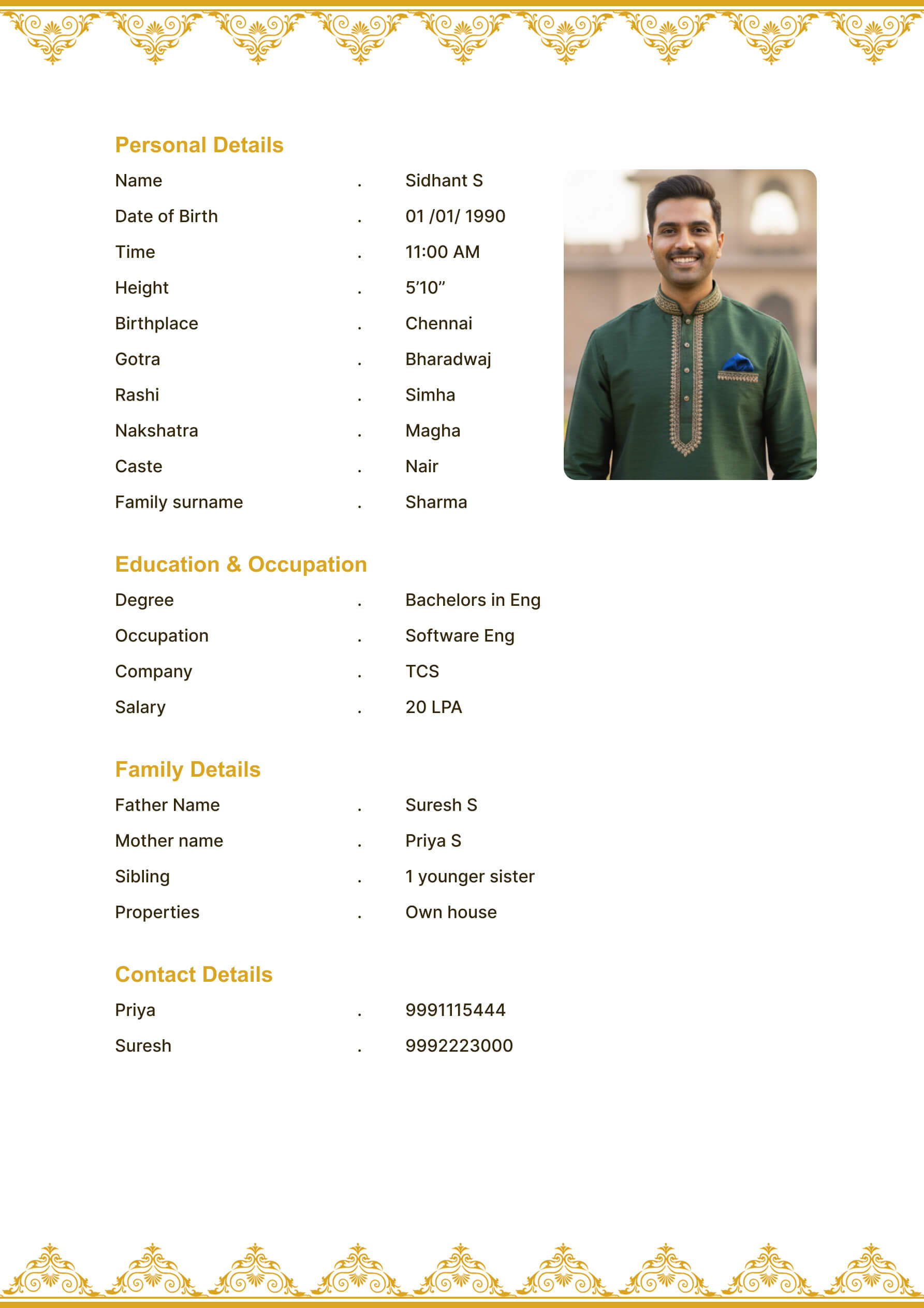 Premium biodata design emphasizing family background
These templates demonstrate the personal, family-focused approach of biodata, contrasting with career-focused resumes. Explore templates →
When to Use a Resume
1. Job Applications
- Employment opportunities
- Career advancement
- Professional networking
- Industry conferences
2. Academic Purposes
- University applications
- Research positions
- Academic conferences
- Scholarship applications
3. Professional Development
- Skill assessment
- Career planning
- Professional certifications
- Industry recognition
Essential Elements in a Marriage Biodata
Personal Information
- Full name and date of birth
- Place of birth and current residence
- Contact information
- Marital status
- Physical attributes (height, complexion)
Family Background
- Parents' names and occupations
- Siblings' information
- Family values and traditions
- Cultural and religious background
- Family business details (if applicable)
Educational Background
- Academic qualifications
- Institutions attended
- Years of completion
- Special achievements
- Certifications and courses
Professional Details
- Current occupation
- Company and designation
- Work experience
- Salary information
- Career goals
Personal Interests
- Hobbies and interests
- Sports and activities
- Cultural pursuits
- Travel preferences
- Lifestyle choices
Partner Expectations
- Desired qualities in a partner
- Age preferences
- Location preferences
- Cultural expectations
- Future plans
Essential Elements in a Professional Resume
Contact Information
- Name and professional title
- Phone number and email
- LinkedIn profile
- Professional website (if applicable)
Professional Summary
- Career objective
- Key skills and expertise
- Professional achievements
- Industry experience
Work Experience
- Company names and positions
- Employment dates
- Key responsibilities
- Achievements and metrics
- Skills utilized
Education
- Degrees and institutions
- Graduation dates
- Relevant coursework
- Academic achievements
Skills
- Technical skills
- Soft skills
- Language proficiency
- Certifications
- Software proficiency
How to Convert a Resume to a Biodata
If you have a professional resume and need to create a biodata for marriage purposes, follow these steps:
1. Expand Personal Information
- Add family background details
- Include cultural and religious information
- Add personal interests and hobbies
- Include lifestyle preferences
2. Modify Professional Section
- Focus on stability and growth potential
- Emphasize family-friendly work environment
- Include salary information
- Add future career plans
3. Add Cultural Elements
- Include family values
- Add religious beliefs
- Mention community involvement
- Include traditional preferences
4. Adjust Tone and Language
- Use respectful and formal language
- Focus on family-oriented goals
- Emphasize personal qualities
- Include partner expectations
How to Convert a Biodata to a Resume
Converting a biodata to a resume for professional purposes requires focusing on relevant information:
1. Focus on Professional Information
- Emphasize work experience
- Highlight relevant skills
- Include professional achievements
- Focus on career goals
2. Remove Personal Details
- Exclude family information
- Remove personal preferences
- Exclude cultural details
- Focus on professional image
3. Restructure Content
- Use professional formatting
- Include action verbs
- Quantify achievements
- Use industry-standard language
4. Optimize for ATS
- Use relevant keywords
- Follow standard format
- Include industry terms
- Optimize for searchability
Common Mistakes to Avoid
In Biodata Creation
- Too Much Information: Don't overwhelm with unnecessary details
- Poor Photo Quality: Use professional, clear photographs
- Inconsistent Formatting: Maintain consistent structure throughout
- Missing Contact Information: Ensure all contact details are current
- Outdated Information: Keep all information current and accurate
In Resume Creation
- Too Long: Keep it concise and relevant
- Generic Content: Customize for specific job requirements
- Poor Formatting: Use clean, professional layout
- Missing Keywords: Include relevant industry terms
- Unprofessional Email: Use professional email address
Professional Tips for Both Documents
1. Keep Information Current
- Update regularly
- Verify all details
- Check contact information
- Review content accuracy
2. Use Professional Language
- Avoid slang and abbreviations
- Use proper grammar and spelling
- Maintain formal tone
- Be clear and concise
3. Include Relevant Information
- Focus on purpose
- Exclude unnecessary details
- Highlight key strengths
- Address specific requirements
4. Maintain Professional Appearance
- Use clean formatting
- Choose appropriate fonts
- Include proper spacing
- Ensure readability
Digital vs. Traditional Formats
Modern Biodata Trends
- Digital Templates: Easy to customize and update
- Interactive Elements: QR codes and digital links
- Professional Design: Modern, attractive layouts
- Easy Sharing: Digital distribution and storage
Traditional Resume Formats
- Standard Templates: Industry-recognized formats
- ATS Optimization: Applicant Tracking System friendly
- Professional Standards: Business-appropriate styling
- Print Ready: Suitable for physical submission
Regional Variations in Biodata
North Indian Biodata
- Emphasis on family background
- Detailed educational information
- Professional achievements
- Cultural and religious details
South Indian Biodata
- Comprehensive family information
- Educational qualifications
- Professional experience
- Cultural traditions
East Indian Biodata
- Family values and traditions
- Educational background
- Professional details
- Cultural preferences
West Indian Biodata
- Business family background
- Professional achievements
- Educational qualifications
- Cultural and social details
Conclusion
Understanding the difference between biodata and resume is essential for creating the right document for your specific purpose. While both documents contain personal information, they serve different goals and require different approaches.
For Marriage Purposes: Create a comprehensive biodata that showcases your personal qualities, family background, and cultural values. Focus on building trust and understanding between families.
For Professional Purposes: Develop a concise resume that highlights your skills, experience, and achievements. Focus on demonstrating your value to potential employers.
Remember, the key to success is creating a document that serves its intended purpose effectively. Whether you're preparing for a marriage proposal or a job application, take the time to create a document that truly represents you and meets your specific needs.
Ready to Create Your Perfect Biodata?
If you're preparing for marriage and need to create a professional biodata, our free biodata maker tool can help you create a beautiful, comprehensive document that showcases your best qualities. With our customizable templates and easy-to-use interface, you can create a biodata that stands out and helps you make the right impression.
Professional Template Gallery
Choose from our collection of premium biodata templates, each designed to create the perfect first impression:
Classic design with sophisticated typography
Clean, contemporary layout for today's couples
Beautiful floral accents for traditional appeal
Premium design with gold accents
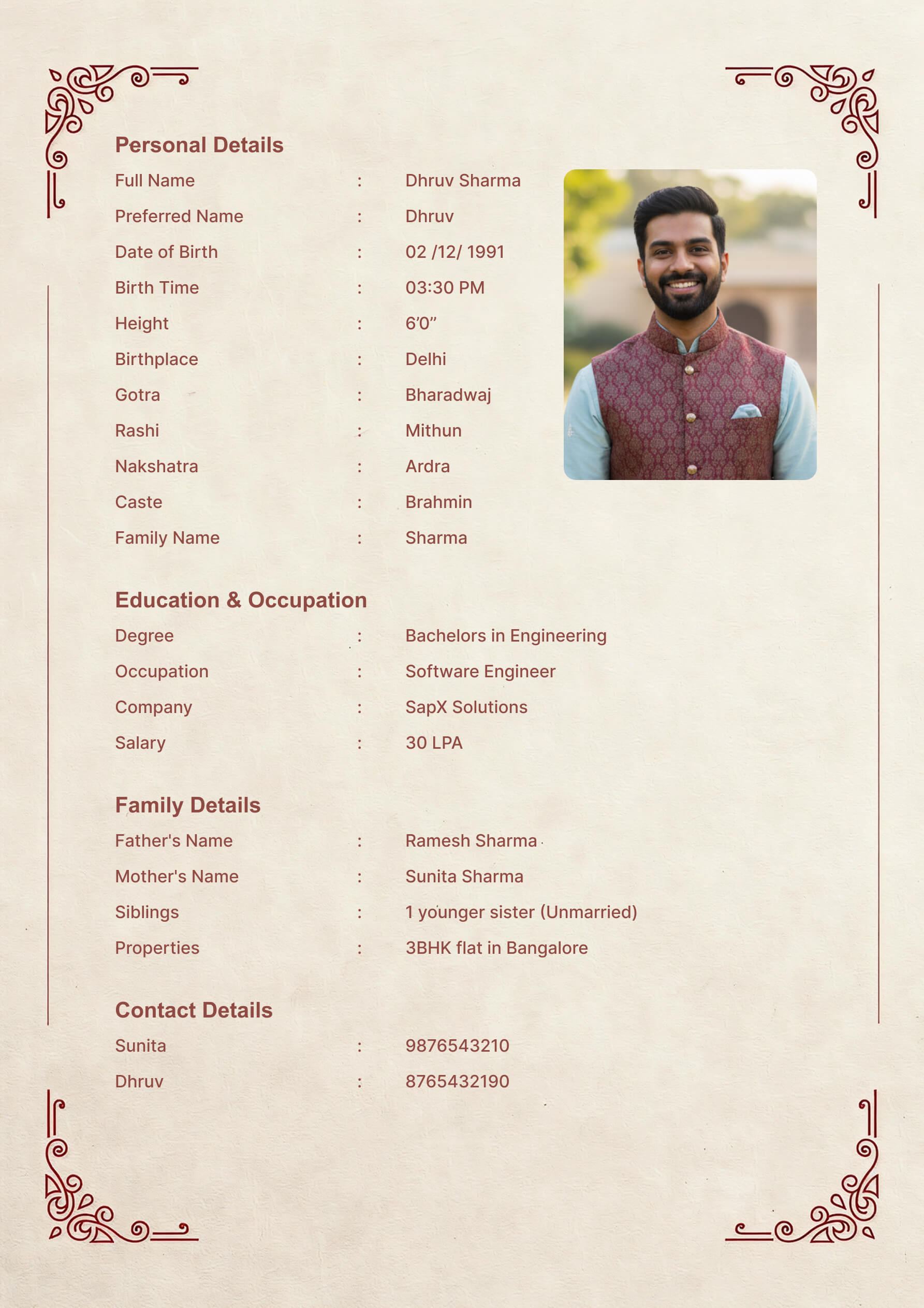 Timeless design that never goes out of style
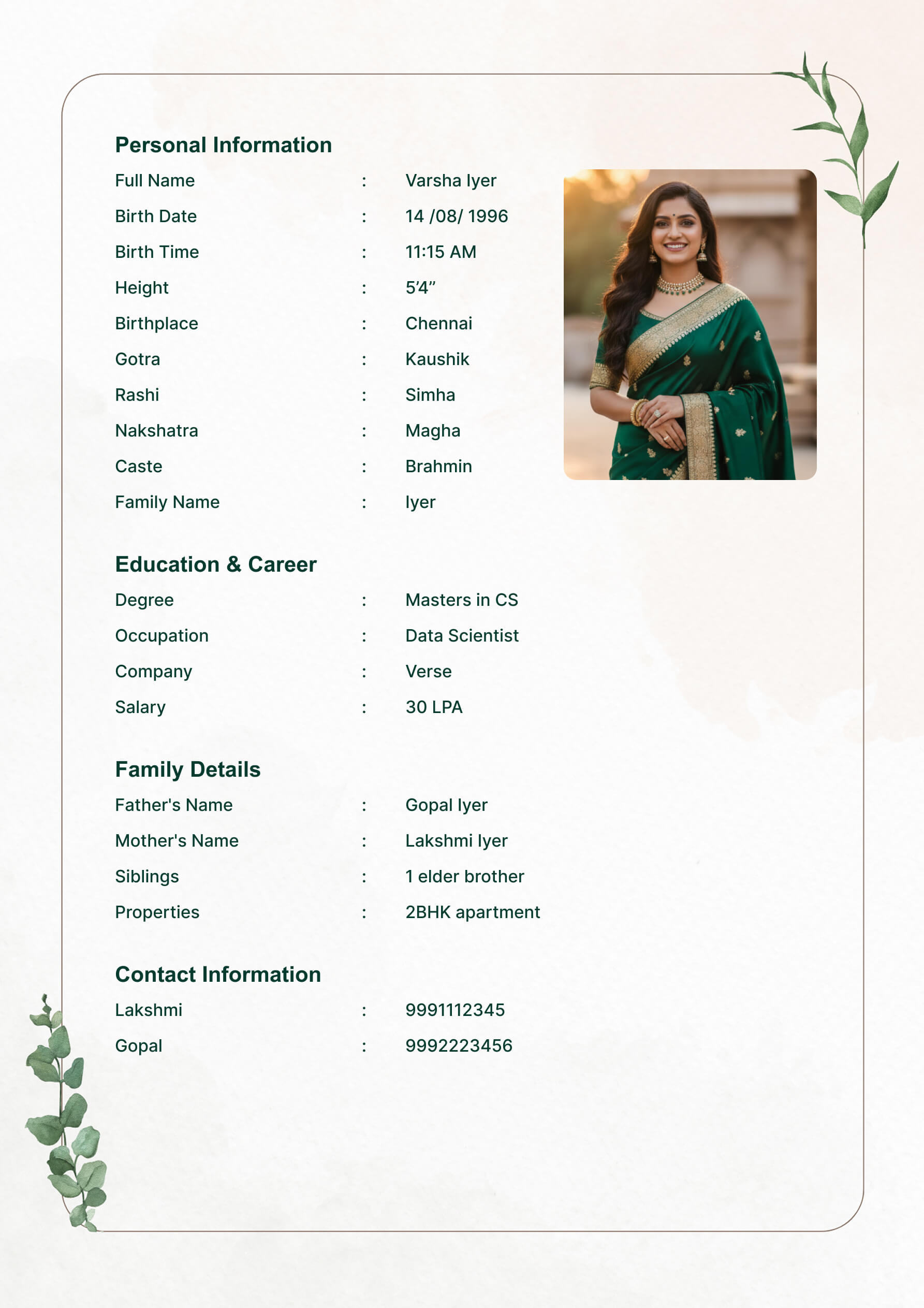 Soft, organic design with earthy tones
Each template is professionally designed, culturally appropriate, and ready to use with your personal information. Click any template to start creating your biodata →
Start creating your biodata today and take the first step towards finding your perfect match!
This comprehensive guide helps you understand when and how to use biodata vs resume for different purposes. Whether you're preparing for marriage or advancing your career, having the right document can make all the difference.